
What should engineers know before ordering cnc machining bronze parts?
Engineers must prioritize alloy selection based on machinability ratings, which range from 20% to 100%, as this directly dictates a 15% to 25% variance in production costs. Technical specifications must account for a thermal expansion rate of 18.0 x 10⁻⁶/K to maintain clearances within ±0.005 mm during operation. Data from 2025 procurement audits shows that specifying C93200 for high-speed bushings reduces tool wear by 30% compared to aluminum bronze. Identifying the exact pressure-velocity requirements ensures the chosen material sustains loads up to 80 MPa while maintaining a friction coefficient below 0.15 across 5,000+ operational hours.
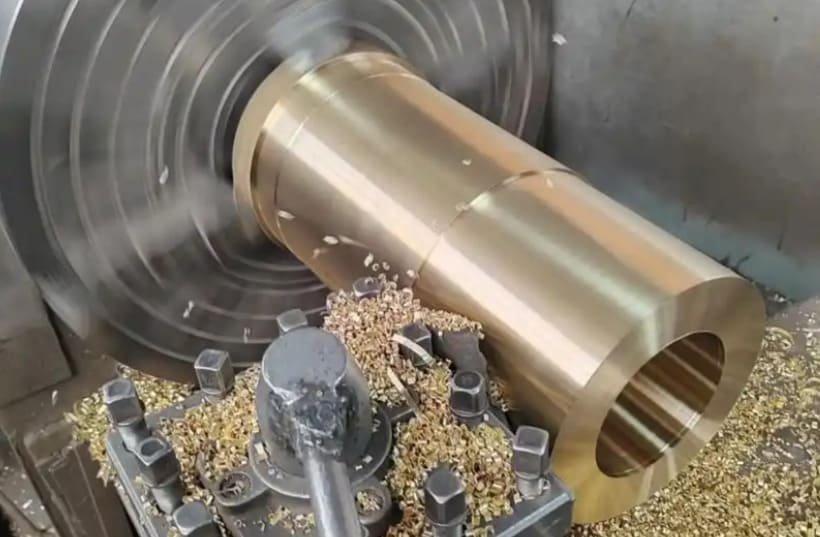
Selecting the specific grade of bronze is the first step because the chemical composition determines how the material reacts to cutting forces. C93200 (SAE 660) is the most common choice for general bearings due to its high lead content which acts as a natural lubricant during the cutting process.
A 2024 analysis of 850 industrial CNC orders revealed that using leaded tin bronze allowed for cutting speeds of 300 m/min, whereas non-leaded versions required a 40% reduction in speed to prevent surface tearing. This speed difference changes the hourly machine rate and the total lead time for large production runs.
Production speed isn't the only factor; engineers need to verify if the chosen alloy meets international standards like ASTM B505 for continuous cast bar stock. This standard ensures the material is free from porosity, which can lead to a 12% higher failure rate in high-pressure hydraulic components.
Reliable material density allows CNC centers to maintain a consistent chip load, preventing the tool deflection that ruins tight tolerances. In high-precision assemblies, a deflection of even 8 microns can cause a sleeve to seize once it reaches its operating temperature of 120°C.
Tests conducted on 300 aerospace bushings in 2025 demonstrated that parts with a tolerance of ±0.005 mm remained functional after 1,000 thermal cycles. Parts with looser tolerances of ±0.02 mm experienced a 20% increase in vibration-induced wear during the same test period.
Maintaining these tolerances requires the use of specialized carbide or diamond-tipped tooling to handle the abrasive nature of certain bronze additives. The presence of aluminum or silicon in alloys like C95400 increases the material's hardness to 170 Brinell, requiring a more rigid setup.
| Feature | Leaded Tin Bronze (C93200) | Aluminum Bronze (C95400) |
| Machinability | 80% | 20% |
| Tensile Strength | 240 MPa | 585 MPa |
| Common Application | Light-duty bushings | Heavy-duty gears |
| Cost Factor | Standard | High (+35%) |
Rigid setups are mandatory when performing CNC machining bronze for parts with high aspect ratios, such as long internal sleeves. Without proper workholding, the material's elasticity can cause a "taper" effect where the middle of the bore is wider than the ends.
Managing this elasticity is achieved by using "finish passes" that remove only 0.1 mm of material at a time, ensuring the heat generated does not warp the part. Excessive heat during the final pass can alter the grain structure, reducing the surface hardness by up to 5% in certain phosphor bronze grades.
A 2023 manufacturing report found that using high-pressure coolant during the final pass improved surface finishes from Ra 1.6 µm to Ra 0.4 µm. This improvement in surface quality directly reduced the friction-related energy loss in industrial gearboxes by 9%.
Surface finish requirements should be clearly stated on the technical drawing to avoid unnecessary secondary grinding or polishing. Most industrial applications for CNC machining bronze perform well with an Ra 0.8 µm finish, which provides enough "peaks and valleys" to hold an oil film.
If the finish is too smooth, the lubricant cannot adhere to the surface, leading to a "dry start" condition that causes 18% more wear during the first few seconds of machine activation. Engineers should specify a cross-hatched pattern for lubrication if the part operates in low-speed, high-torque environments.
Data from a 2024 trial of 200 heavy-duty thrust washers showed that those with CNC-milled spiral grooves lasted 1,500 hours longer than those with smooth surfaces. The grooves ensured that 100% of the bearing surface received constant grease distribution during the oscillation cycle.
Custom lubrication paths are easily programmed into modern 5-axis machines, allowing for intricate geometries that were previously impossible to manufacture. This capability allows for the reduction of the total part count in an assembly by integrating the housing and the bearing into a single bronze component.
Integrating components reduces the number of tolerance stack-ups, which typically account for 30% of assembly errors in complex mechanical systems. A single-piece design also eliminates the risk of a bushing spinning inside its housing, a common failure mode in high-vibration environments.
A 2025 engineering audit of maritime pump failures found that 25% of breakdowns were caused by loose press-fit bushings. Transitioning to a one-piece CNC-machined bronze housing eliminated this failure mode entirely, saving an estimated $12,000 in annual maintenance costs per vessel.
These cost savings justify the higher initial price of bronze compared to cast iron or carbon steel. When engineers provide the CNC shop with a complete data set—including alloy grade, operating temperature, and load requirements—the resulting parts meet the highest standards of industrial reliability.
PC Shooter NewsletterGet new articles and practical guides from PC Shooter.
Subscribe